
We come home from work, flop down on the couch, and the phone screen absorbs the entire evening. This scenario repeats so often that we end up forgetting there are simple alternatives, accessible without a car or a hefty budget. The problem isn’t the lack of activities and leisure options; it’s that we no longer know where to start when fatigue dictates our choices.
Choose an activity based on your energy level, not a generic list
Most guides offer catalogs categorized by type: sports, culture, nature. We browse the list, nothing fits our current state, and we close the tab. A more practical approach is to start from your actual energy level to guide your choice.
When we are drained after a busy day, an intense physical activity doesn’t hold up. It’s better to aim for a gentle action: a free drawing workshop, a reading session in a park, or a home cooking class following a filmed recipe. The simple act of creating something with our hands (a dish, a sketch, a clay pot) generates a sense of accomplishment that passive scrolling does not provide.
Conversely, when we feel a diffuse restlessness, a brisk walk or a session of open water swimming channels that energy. We can also explore the leisure activities available on Aipdb to find options close to home, filtered by type of effort and format.
The idea is not to plan a rigid schedule. It’s to ask a basic question before choosing: do I need to move, create, or slow down?

Offline activities: rebuilding concentration in daily life
In recent years, psychologists specializing in anxiety management have emphasized the role of offline activities as a regulatory tool. The principle is nothing mystical: by turning off notifications for an hour, we allow the brain to refocus on a single task.
Gardening illustrates this mechanism well. Even on a balcony, repotting plants, monitoring a sprout, watering at fixed times imposes a disconnected rhythm. DIY works on the same principle: sanding a shelf, repairing a piece of furniture, adjusting a hinge. These actions require sustained attention that interrupts the reflex to check one’s phone.
Three formats that work without expensive equipment
- Photographic walking: go out with a camera (even an old compact) and set a theme (doors, reflections, textures). We observe instead of scrolling, and the walk lasts longer than a trip around the block.
- Timed free writing: fifteen minutes, a pen, a notebook, no rereading until the end. Practiced in the morning, this format clears the mind before the day fills it.
- Cooking without a digital recipe: open the fridge, choose three ingredients, improvise. Disconnecting during preparation forces adaptation and creativity.
Feedback varies on this point, but several testimonies converge: an hour of regular screen-free time produces visible effects on sleep within a few weeks.
Family or solo activities: adapting the format to the real context
A parent with young children does not seek the same leisure as an elderly person living alone or a student in shared accommodation. Accessible activities must take into account very concrete constraints: available space, mobility, budget, presence or absence of a group.
With children at home
Creative workshops at home remain the most flexible format. Painting, modeling clay, cardboard construction: the materials are inexpensive, and the activity occupies one to two hours. For families in apartments, a motor skills course in the living room (cushions, sheet tunnel, balancing on a board) replaces a trip to the park when the weather prevents it.
For a person alone or with reduced mobility
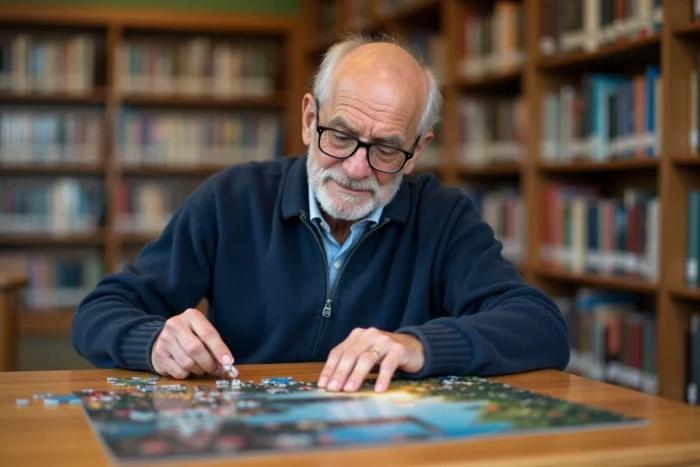
Online classes (watercolor, foreign language, gentle yoga) offer minimal social interaction without travel. Local associations also offer adapted in-person workshops. Board game clubs in libraries, open to all ages and free in most municipalities, are often underestimated.
Nature leisure in urban areas: what exists within thirty minutes
Nature is often associated with hiking in the mountains or by the sea. In reality, most urban areas have accessible routes that we overlook out of habit.
Urban parks with free access sports courses have multiplied in recent years. Pull-up bars, balance beams, stretching stations: you find as many retirees as seasoned athletes there. It’s free, no registration required, and accessible twelve months a year.
Freshwater outings (canoeing, paddleboarding on a municipal body of water) represent another underutilized format. Several leisure centers on the outskirts of major cities like Lyon or Paris offer short slots suitable for a half-day.
- Check municipal water sports centers: often reduced rates for residents, equipment provided.
- Identify shared gardens in the neighborhood: sometimes free access, otherwise a symbolic annual fee.
- Consult the programs of departmental parks: guided nature outings, botanical workshops, birdwatching.
The main barrier is not the availability of options. It’s the lack of awareness of what exists nearby. A quick visit to your town hall or local tourist office website usually unlocks several options you had never considered.
Ultimately, brightening your daily life requires neither an exceptional budget nor complex organization. Often, it just takes changing one parameter: turning off the screen, stepping outside for thirty minutes, or accepting to create something imperfect with your hands. The first step always takes a bit of effort; the second comes naturally.