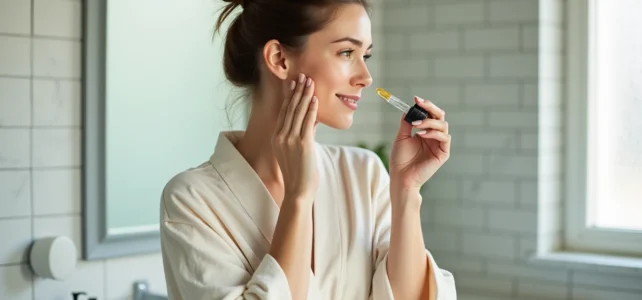
An effective beauty tip relies on a precise mechanism: adapting an action or product to the physiology of one’s skin, hair, or nails. Far from twelve-step routines, the actions that truly change daily life are those that target an identified need and are based on active ingredients compatible with one’s skin type. Understanding these mechanisms allows one to distinguish what works from what is merely marketing.
Skinimalism: reducing your beauty routine to what matters
Skinimalism refers to an approach that limits your routine to products that are truly useful and well-tolerated. This structuring trend in the cosmetics market reflects a rejection of lengthy routines often promoted by traditional beauty guides.
The principle is simple: every product applied to the skin must meet a measurable need. A gentle cleanser, a moisturizing treatment suitable for one’s skin type, and sun protection cover the majority of daily facial needs.
Using multiple serums, essences, and lotions without knowing their exact function can disrupt the skin barrier. A skin that feels tight after a morning routine sends a clear signal: there is one product too many or an incorrectly chosen active ingredient. Numerous resources are available to identify the right actions based on one’s profile, and the website secretdebeaute.net gathers content categorized by theme to refine this selection.
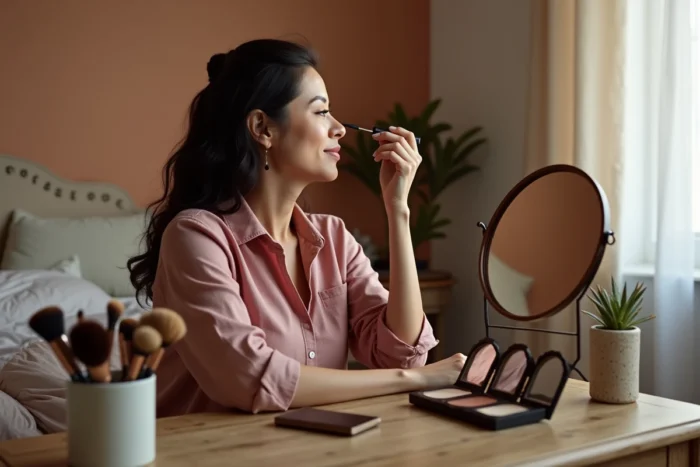
Oil and moisturizer: choosing according to your skin type
Hydration is the foundation of any beauty routine, but the choice between a vegetable oil and a cream directly depends on the nature of the epidermis. Confusing the two leads to disappointing results.
A moisturizer contains water and humectants that attract water into the superficial layers of the skin. It is suitable for normal to combination skin, which needs a supply of water without a greasy residue.
An oil, on the other hand, does not contain water. It acts as an occlusive agent that prevents the water already present in the skin from evaporating. Dry to very dry skin benefits significantly from this lipid barrier. Applying oil on dehydrated skin without prior hydration solves nothing, as it seals in skin that is already lacking water.
Combining oil and cream in the right order
The basic rule: water before oil. First, apply the aqueous treatment (hydrating serum or light cream), then the oil on top to lock in hydration. Reversing this order prevents water-soluble actives from penetrating.
For the face, a few drops of jojoba oil or squalane are sufficient. These two oils have a lipid composition similar to human sebum, which limits the risk of reaction.
Daily hair care: water, collagen, and technical gestures
Hair undergoes mechanical and chemical stress every day. The most effective hair beauty tips rely on three axes: managing water, strengthening the fiber, and reducing friction.
- Rinsing hair with lukewarm water (not hot) preserves the natural lipids of the scalp and limits drying of the lengths.
- Spacing out shampoos allows sebum to play its protective role. Two to three washes per week are sufficient for most hair types.
- Using a wide-toothed comb on wet hair reduces breakage, as the water-saturated hair fiber is more fragile and elastic.
- Applying a treatment containing collagen or amino acids on the lengths helps to fill in damaged scales and smooth the hair surface.
Air drying remains the least aggressive method. When a hairdryer is necessary, keeping it at a distance and at medium temperature limits thermal damage to the cuticle.
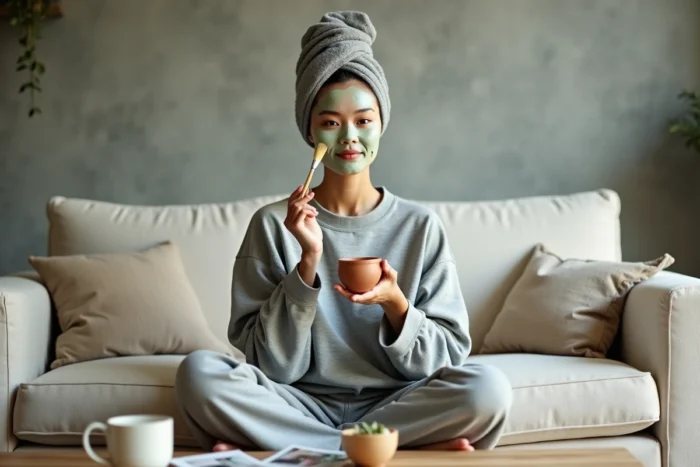
Facial massage: a beauty gesture that acts on microcirculation
Facial massage is not a superficial cosmetic gesture. By stimulating blood and lymphatic microcirculation, it promotes oxygenation of the cells and drainage of toxins accumulated under the skin.
Two to three minutes a day is sufficient. The movements always start from the center of the face to the outside, and from the bottom to the top, to follow the natural lymphatic flow.
Basic technique without accessories
With slightly oiled fingers, apply gliding pressures along the jawline, then move up towards the temples. Repeat the movement five times. Then go under the cheekbones, smoothing towards the ears. Finish with gentle pressures on the drainage points, just below the lobes.
Consistency matters more than the duration of each session. A daily two-minute massage produces visible results on the complexion in a few weeks, whereas a weekly ten-minute session has only a temporary effect.
Health and beauty fusion: what consumers expect in 2026
Expectations around skincare products are evolving towards a fusion of health and aesthetics. French consumers are looking for products that simultaneously address appearance and overall well-being: strengthening the skin barrier, respecting the microbiome, and protecting against environmental aggressions.
This trend is changing the composition of available products. Short formulations, with fewer actives but better dosed, are gaining ground against lengthy INCI lists. A treatment that combines hydration and protection of the skin flora now replaces two distinct products in a skinimalist routine.
Makeup is following the same trajectory. Approaches like “Palm Color Mix,” where contrasting shades are mixed in the palm before application to create colorful smoky effects, transform the makeup gesture into a daily creative ritual rather than just an aesthetic correction.
Building an effective daily beauty routine ultimately relies on an honest sorting: identifying the three or four actions that meet a real need for one’s skin and hair, executing them consistently, and abandoning the rest. The miracle product does not exist, but a well-targeted action, repeated every day, produces tangible results.