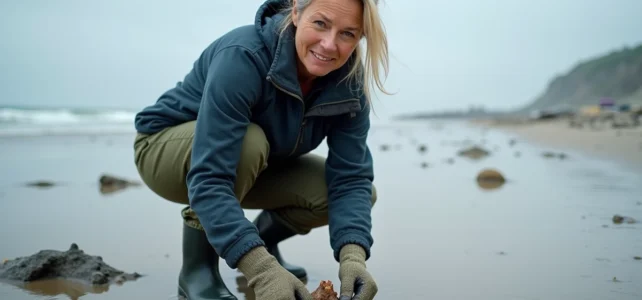
On the Atlantic coast, after a southwest wind, the strandline overflows with light, smooth branches that the waves have deposited at the top of the beach. The next day, everything has disappeared, collected by locals who know the tide calendar and the best spots. To gather driftwood under good conditions, timing is as important as the choice of piece.
High Tides and Storms: The Driftwood Collection Window
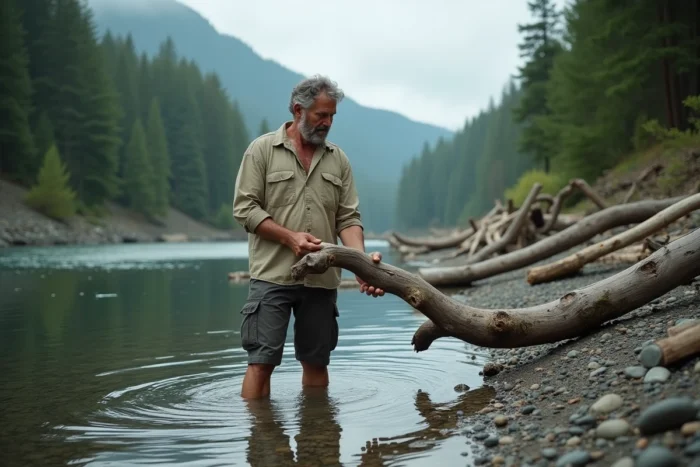
Driftwood arrives on the beaches through coastal currents and river floods. It is mainly found near river mouths, on the shores of lakes or reservoirs, and along beaches exposed to dominant currents.
The best deposits form after significant weather events. A winter storm, an autumn flood, or a high tide coefficient pushes the wood up the beach, well above the usual waterline. It is in the hours following the falling tide that the most beautiful pieces are found, before other walkers come by.
In practice, we target the large high tides with high coefficients between October and March. Winter remains the most productive season: storms follow one another, swollen rivers carry more wood, and beach attendance is low. On the Mediterranean coast, it is mainly the Cévennes episodes and easterly storms that feed the deposits, as the Ligurian current reminds us, which deposits driftwood on the Var beaches every winter.
To know precisely when to collect driftwood on Simply Habitat, we cross marine weather with the tide calendar, which allows us to identify the most favorable time slots.
Regulations on Coastal Collection: What the Environmental Code Says
Before filling a bag, it is better to know the legal framework. Article L.321-8 of the Environmental Code specifies that the extraction of materials from the coast is limited or prohibited when it risks compromising the integrity of beaches, dunes, cliffs, or marshes.
In practice, collecting a few pieces for personal use is generally tolerated, but some areas formally prohibit it by municipal decree. Fines for encroachment on public property can be high.
Several coastal municipalities emphasize the role of driftwood in combating erosion. Left at the foot of the dune, it contributes to the consolidation of the dune cordon and serves as a nesting support for certain species. Wildlife protection organizations advise against collection in nesting areas during spring, as driftwood provides refuge for nesting birds like the ringed plover.
- Check the municipal decrees posted at beach access points before any collection.
- Do not collect at the foot of dunes or in marked nesting areas.
- Limit yourself to a few pieces for personal decorative use, never to mass collection.
- Prefer wood already at the top of the beach, detached from the active strandline.
Sorting on the Beach: Recognizing a Good Piece of Driftwood
The temptation to collect everything is strong, especially after a big tide. A rigorous sorting on-site prevents bringing back unusable pieces that will end up in the trash.
A good piece of driftwood sounds solid when tapped, remains dense in hand, and shows no black mold or insect galleries. If the piece crumbles under the nail or emits a smell of stagnant moisture, leave it behind.
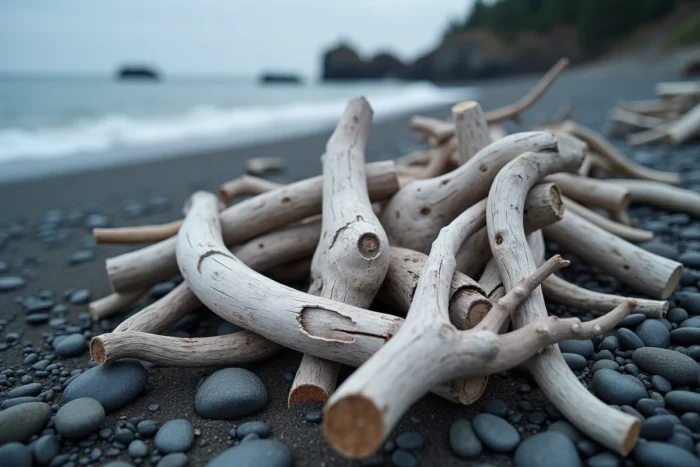
Look for wood that is barkless, bleached by salt and sun. The journey in the water and the friction have already done the work of natural sanding. The most interesting pieces for decoration (lamp, mirror, coffee table) have marked curves or forks that give them character.
Opinions vary on this point, but hardwoods (oak, beech) withstand drying better than softwoods, which tend to crack. On-site, density can be assessed by weighing: a piece that is unusually light for its size is often too degraded to be used in creation.
Cleaning and Drying Driftwood Before Use in Decoration
Thorough cleaning takes several days. A simple rinse under the tap is not enough to eliminate salt, embedded sand, and any parasites.
- Soak the pieces in a large basin of fresh water for two to three days to desalinate, changing the water daily.
- Brush the surface with a stiff brush to remove sand residues and detached fibers.
- To eliminate insects, soaking in water mixed with diluted bleach for a few hours is effective.
- Rinse thoroughly with clean water after any treatment.
Drying takes several weeks in a ventilated place away from direct sunlight. Sudden exposure to heat causes cracking. Regularly turn the pieces so that moisture escapes evenly.
Once dry, driftwood can be worked by hand or with simple tools (saw, drill, fine sandpaper). Thick varnish should be avoided as it alters the natural patina. A clear hard oil or a matte wax is sufficient to protect the surface while maintaining the raw look that makes this material interesting for decoration.
Strandline and Coastal Management: Why Not Collect Everything
More and more communities are integrating driftwood into a comprehensive approach to managing the strandline. Instead of mechanically cleaning everything at the start of the season, some beaches intentionally maintain bands of strandline over entire sectors to promote biodiversity and coastal resilience. Intensive cleanups are confined to highly touristy areas.
This logic changes the way we approach collection. Collecting two or three nice pieces after a storm remains reasonable, but raking an entire area deprives the dune and microfauna of a structuring element. Driftwood traps sand, slows the wind, provides shade for invertebrates, and protects nests.
The best time to collect driftwood, ultimately, is when the sea has just deposited it abundantly, away from sensitive areas, limiting oneself to what will actually be used. Targeted collection after a big winter tide, with careful sorting on-site and patient cleaning at home, yields much better results than opportunistic collection in the height of summer on an overexploited beach.