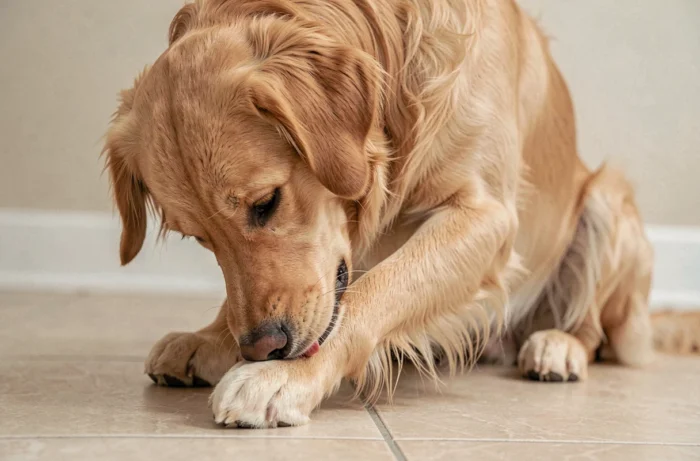
A dog that repeatedly licks its dewclaw almost always signals a localized problem with that particular claw. The dewclaw, unlike the other toes, does not touch the ground while walking. This anatomical detail changes everything: the claw does not wear down naturally, and the conditions affecting it differ from those of the weight-bearing paws.
Dog Dewclaw: A Unique Claw in Paw Anatomy
The dewclaw is located high on the inner side of the front paw (sometimes also on the hind paw). Its lack of contact with the ground makes it vulnerable to issues that other claws do not experience.
An overly long dewclaw can curl back and penetrate the skin. The claw grows in a circle, digs into the pad or the adjacent ridge, creates a wound, and promotes infection. Many owners check the weight-bearing claws without thinking to inspect the base and the entire length of the dewclaw.
Understanding why my dog licks its dewclaw first requires examining this claw from all angles, including the junction area between the nail and the skin.
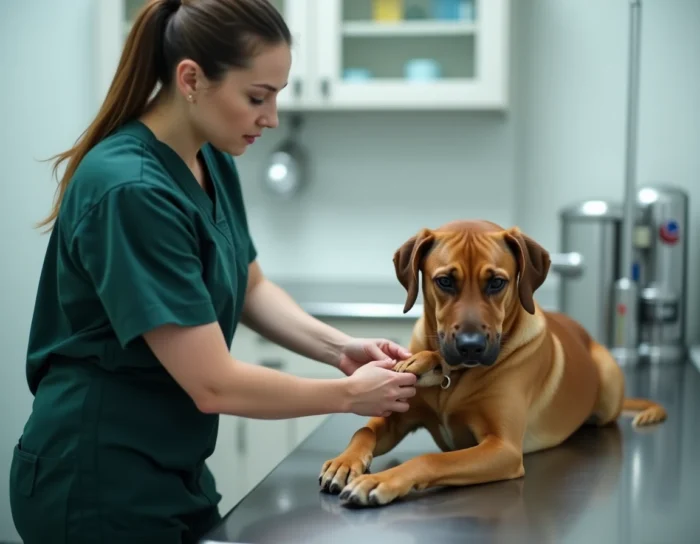
Causes of Dewclaw Licking in Dogs: Comparative Table
The reasons that lead a dog to lick its dewclaw can be grouped into a few distinct categories. Their severity and the appropriate response vary significantly.
| Cause | Associated Signs | Urgency | Action |
|---|---|---|---|
| Overly long dewclaw (growing in a spiral) | Curling claw, visible discomfort, moderate licking | Low to moderate | Claw trimming, monthly check-up |
| Claw snag or crack | Sudden licking after a walk, displaced or split claw | Moderate | Visual inspection, veterinary consultation if the claw moves |
| Partial or total avulsion | Bleeding, marked pain, possible limping | High | Rapid veterinary consultation |
| Nail bed infection | Redness, heat, swelling, discharge, odor | High | Veterinary diagnosis (bacterial, fungal) |
| Foreign body (thorn, splinter) | Sudden licking, sometimes after a walk | Moderate | Removal if visible, otherwise consultation |
| Stress or compulsive behavior | Persistent licking without visible lesion, anxious context | Variable | Behavioral assessment |
The distinction between a mechanical cause (long claw, snag) and an infectious or behavioral cause directly guides the management. Sudden licking after a walk points to trauma, while chronic licking without a visible lesion may indicate stress.
Snagging and Foreign Bodies: The Underestimated Cause of Dewclaw Licking
Dewclaws easily get caught in carpet loops, wire fencing, brambles, or upholstery. A snag can crack the claw, partially displace it, or tear it off.
A cracked claw can remain painful without any obvious anomaly to the naked eye. The dog starts licking the area in the hours following the incident. The crack may be located at the base of the dewclaw, invisible if only the tip is examined.
A foreign body (thorn, small wood splinter, glass fragment) lodged in the skin fold around the dewclaw produces the same behavior. The licking is then focused, intense, and starts suddenly.
What Distinguishes Trauma from Allergy
In the case of a skin allergy, the dog usually licks several paws, not just one dewclaw. Allergic licking is often accompanied by diffuse redness between the toes or under the pads.
Targeted licking of a single dewclaw points to a local cause: trauma, nail bed infection, or ingrown claw. This distinction helps avoid unnecessary anti-allergic treatments.
Nail Bed Infection: When Simple Licking Hides a Deeper Problem
An infection around the dewclaw does not resolve with a simple surface antiseptic. The signs that should raise concern include:
- Localized redness and swelling around the base of the claw, sometimes accompanied by warmth to the touch
- Discharge (clear, yellowish, or blood-tinged) and persistent bad odor despite cleaning
- Claw changing color, becoming brittle, or partially detaching from its bed
Applying a surface product may fail if the underlying cause persists. A bacterial infection of the nail fold sometimes requires sampling to identify the germ, and a fungal infection demands specific and prolonged treatment. The veterinarian may also look for deeper inflammation of the bone tissue in the phalanx.
Compulsive licking worsens the situation: saliva maintains moisture, macerates tissues, and promotes germ proliferation. The vicious cycle sets in quickly.
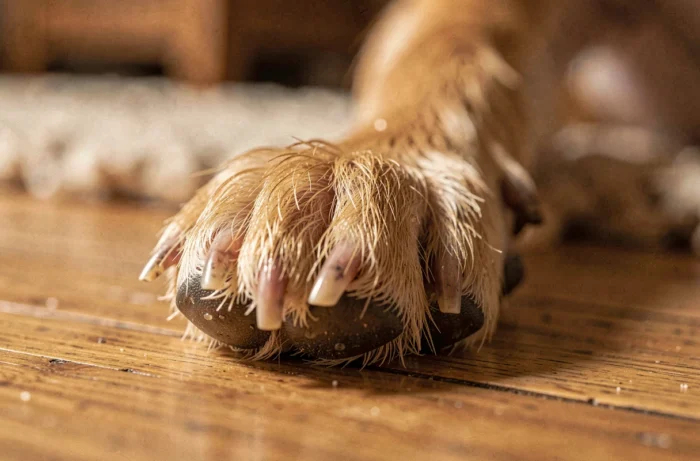
Practical Solutions to Limit Dewclaw Licking
The first measure is to regularly inspect the dewclaw, gently parting the fur around the claw to examine the base. Trimming the dewclaw should be part of the grooming routine, just like the weight-bearing claws.
Trimming and Preventive Maintenance of the Dewclaw
The check should focus on the base and the entire length of the dewclaw, not just its tip. A dewclaw that begins to curve toward the pad should be trimmed without delay. For fearful dogs, a professional groomer or veterinarian can safely perform the trimming.
When to Consult a Veterinarian for Dewclaw Licking
Some situations warrant a quick consultation:
- Active bleeding or visibly displaced, split, or torn claw
- Swelling, redness, or discharge around the dewclaw fold that persists beyond two days
- Licking that does not stop despite the absence of a visible lesion (behavioral issue to explore)
- Limping or refusal to place the paw down, even slightly
Dewclaw licking that lasts more than a few days always deserves a veterinary examination. The main risk is allowing an infection to progress to deeper tissues or missing a fracture of the distal phalanx.
Temporarily protecting the dewclaw with a light bandage can limit licking while waiting for the consultation, provided it is not tight and is changed daily. An Elizabethan collar remains an effective option for dogs that remove any bandage.
The dewclaw remains the most neglected claw during regular grooming. A monthly check of its length and the condition of the surrounding skin is sufficient in most cases to prevent the problems that trigger licking.