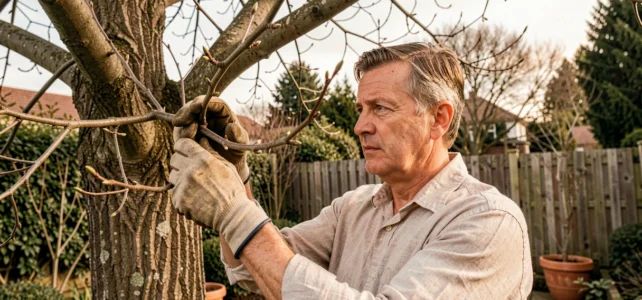
A plane mulberry tree established for several years, dense foliage, generous shade, but no fruit on the branches or on the ground. This problem is common, and its causes are more varied than one might think. Before changing anything in the care of your tree, the first step is to precisely identify the origin of this lack of fruiting.
Sterile cultivar or fruiting mulberry: the diagnosis that changes everything
The most common cause of a fruitless plane mulberry has nothing to do with the soil, watering, or exposure. It is related to the genetics of the tree itself.
The cultivar Morus kagayamae ‘Fruitless’, sold as a shade tree, is genetically sterile and will never produce fruit. No modification of pruning, fertilization, or watering will change this reality. If the label on the plant mentioned “Fruitless” or “sterile” (sometimes in small print), the tree is fulfilling its role perfectly.
However, confusion is very widespread. Many gardeners buy a plane mulberry thinking they will harvest mulberries, without checking the variety. The table below summarizes the differences between the two categories.
| Characteristic | Fruiting plane mulberry (Morus) | ‘Fruitless’ cultivar (sterile) |
|---|---|---|
| Fruit production | Yes, edible mulberries | None |
| Main use | Harvest and shade | Exclusive shade, terraces, and paths |
| Ground mess | Significant (smashed fruits, stains) | None |
| Possibility to correct the absence of fruit | Yes (pruning, care, patience) | No, replacement necessary |
If after checking your tree is indeed a fruiting cultivar, the following sections detail the real causes of the absence of mulberries. Knowing whether the edible fruits of the plane mulberry interest you for harvesting or if shade is sufficient will directly guide the next steps.
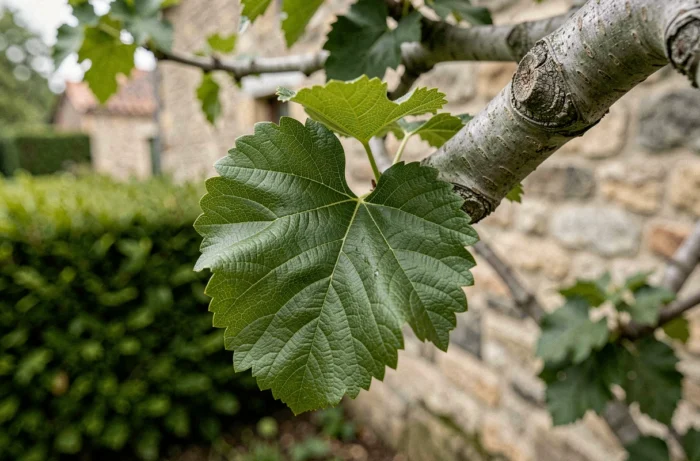
Too severe pruning and removal of fruiting wood
On a fruiting mulberry, flower buds form on the wood from the previous year. This is a technical point that most maintenance guides overlook when discussing umbrella pruning.
Excessive winter pruning, which drastically shortens or removes the current year’s shoots, simultaneously eliminates future reproductive organs. The result is a tree that starts vigorously in spring with beautiful foliage but has no support to flower and fruit.
Differentiating training pruning and fruiting pruning
Training pruning aims to structure the crown into an umbrella shape. It is done at the end of winter on the main branches. In contrast, pruning that preserves fruiting retains a significant portion of the lateral shoots from the previous year.
- Remove dead, diseased, or crossing branches, without systematically touching the lateral shoots bearing buds
- Limit the shortening of current year’s shoots to one-third of their length, no more
- Postpone severe restructuring pruning to years when fruiting is not a priority
A plane mulberry pruned every winter into a “ball” will not fruit, even if the soil and exposure are perfect. The correlation between radical pruning and absence of fruit is direct.
Tree youth and soil conditions in the garden
A recently planted fruiting plane mulberry takes several years before producing its first mulberries. This juvenile period varies depending on planting conditions, but a significant delay must be expected after planting to observe the first fruiting.
During this phase, the tree dedicates its energy to root development and the growth of the trunk and main branches. Trying to force production through a massive application of nitrogen fertilizer would be counterproductive: nitrogen stimulates vegetative growth (leaves, shoots) at the expense of flowering.
Soil and drainage: two underestimated parameters
The plane mulberry tolerates various soils, but constantly waterlogged or very compact soil hinders fruiting. Insufficient drainage causes root stress that leads the tree to prioritize its survival over reproduction.
Conversely, soil that is too poor and dry at depth also limits the tree’s ability to support fruiting. The balance is found in well-draining but cool soil, with mulch at the base to maintain moisture without excess.
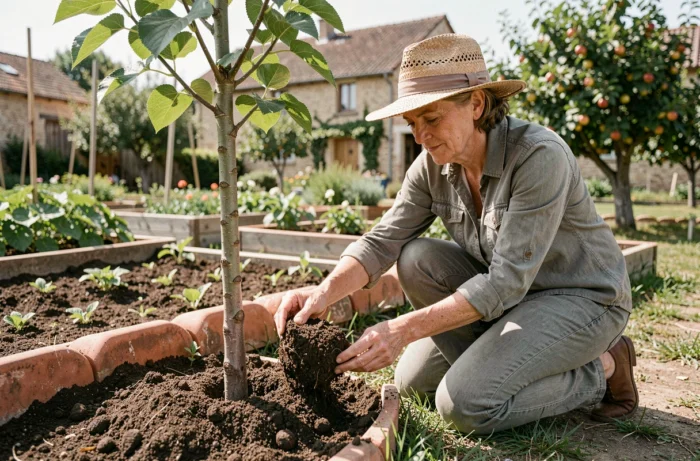
Pollination and exposure: the climatic factors of the plane mulberry
Mulberries of the genus Morus are generally monoecious or dioecious depending on the species and cultivars. Some individuals require a nearby pollinator to produce fruit. If your tree is isolated in the garden and the cultivar requires cross-pollination, the absence of a partner explains the problem.
Wind provides most of the pollination in mulberries. A tree planted in a very enclosed space, protected by high walls or dense hedges on all sides, receives less pollen. This factor, rarely mentioned, can reduce fruit set even when a second mulberry exists nearby.
Late spring frost
The flowers of the mulberry appear in spring, a time still exposed to late frosts in many regions of France. Just one night of freezing temperatures is enough to destroy the flowers and compromise the entire harvest for the year. The tree then resumes normally in foliage, giving the impression that everything is fine, while the fruiting has been annihilated in one night.
- Observe the tree at the time of flowering to detect any browning of the flowers after a cold night
- A temporary winter cover placed during frost alerts protects the most accessible flowers
- Planting the mulberry against a south or southwest-facing wall provides a few degrees of additional protection due to thermal inertia
The absence of fruit on a fruiting plane mulberry rarely results from a single cause. The diagnosis begins with verifying the cultivar, continues with analyzing the pruning regime, and then evaluates the soil, exposure, and local climatic context. Correcting just one of these parameters can sometimes restart production as early as the following year.