
Auriculotherapy applied to weight management relies on the stimulation of reflex points in the auricular pavilion, mapped out since the work of Paul Nogier. Magnetic devices like Orimag exploit this mapping to target areas related to appetite regulation and digestive metabolism. Here we detail the technical mechanisms, documented limitations, and the conditions under which this type of device can truly contribute to weight loss.
Auricular Mapping and Metabolic Points Targeted by Magnets
The ear pavilion concentrates more than two hundred reflex points referenced by international auriculotherapy nomenclatures. For weight management, three areas attract the attention of practitioners: the Shen Men point (anxiolytic, reduction of food-related stress), the stomach point (regulation of satiety), and the endocrine point (hormonal balance related to fat storage).
A magnetic device placed on the tragus or antitragus exerts a continuous static magnetic pressure on these points. This stimulation differs from acupuncture needles in its non-invasive nature and the duration of application, often several hours a day. We observe that the precise location of placement directly conditions the effectiveness felt by the wearer.
For those wishing to discover Orimag on Résolution Santé, the device is positioned on the auricular area associated with appetite control, with a detailed daily wearing protocol.
Auriculotherapy and Weight Loss: What Recent Reviews Show
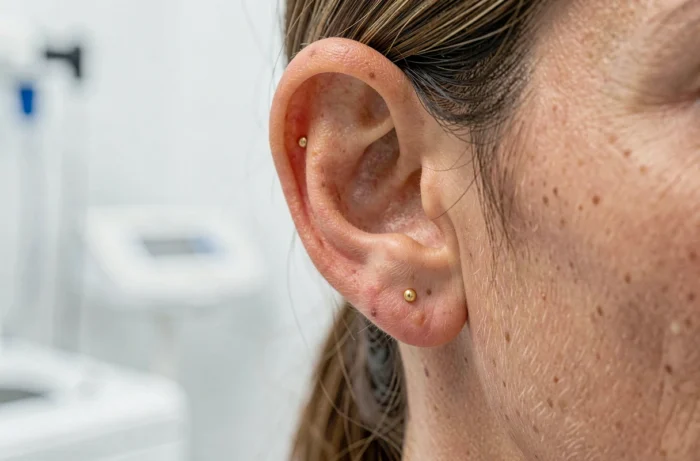
The systematic reviews published between 2023 and 2025 converge on one finding: auricular acupuncture produces a statistically significant but clinically modest effect on weight and BMI reduction. The observed advantage is a few kilograms over a period of eight to twelve weeks compared to a control group benefiting only from dietary rebalancing.
This result calls for a nuanced reading. Beyond six to twelve months, the majority of studies observe a disappearance of the weight gap when dietary and physical activity changes are not maintained. Auriculotherapy does not function as an autonomous treatment. We recommend considering it as a complementary lever, not as an isolated solution.
Mechanism of Action on Cravings and Satiety
Auricular stimulation primarily acts on vagal regulation. The vagus nerve, of which an auricular branch innervates the pavilion, participates in controlling gastric motility and transmitting satiety signals to the brainstem. By stimulating this branch, a magnetic device like Orimag can reduce cravings and modulate appetite without resorting to a pharmacological appetite suppressant.
The available data also indicate an indirect anxiolytic effect. Chronic stress promotes the secretion of cortisol, a hormone involved in abdominal storage. By lowering the level of nervous tension, auricular stimulation helps limit food compulsions related to stress.
Orimag: Wearing Protocol and Conditions of Effectiveness
The Orimag device consists of magnets to be fixed on specific points of the ear. Its daily use follows a gradual protocol that we detail to enhance results.
- Position the magnets on the indicated area (usually the tragus or concha), checking for a slight tingling that confirms the stimulation of the reflex point
- Start with short sessions and gradually increase the wearing time over several days to acclimate the auricular cartilage
- Systematically associate the wearing of the device with dietary rebalancing and regular physical activity; otherwise, the effect on weight remains temporary
- Monitor the skin of the auricular pavilion to prevent any irritation or local inflammation related to prolonged wearing
This last point deserves particular attention. Recent syntheses mention local risks (inflammation, cartilage irritation) related to prolonged wearing of auricular devices. Daily cleaning of the contact area and alternating between the two ears limit these inconveniences.

Regulatory Status of Auricular Stimulation Devices in France
Since 2018, specific classes of auricular stimulation devices have obtained regulatory approvals (of the 510(k) type in the United States) for use as a complement to weight loss programs. These approvals require explicit mention of the adjunctive nature: the device cannot be presented as an autonomous weight loss treatment.
In France, auricular magnets intended for weight management are not reimbursed by Health Insurance. Their marketing remains free, provided they comply with European regulations on medical devices, which require risk control and compliant labeling. We recommend checking that the chosen product clearly states its regulatory status and its limitations of use.
Auricular Magnetotherapy or Traditional Acupuncture: Which Method to Choose
Auricular acupuncture practiced in a clinic uses semi-permanent needles (ASP) or vaccaria seeds held by an adhesive. Auricular magnetotherapy, on the other hand, relies on a static magnetic field. Both approaches target the same reflex points but differ in practicality.
- Acupuncture in a clinic allows for very precise placement by a trained practitioner, with personalized adjustments at each session
- A magnetic device like Orimag offers total autonomy on a daily basis, without appointments, with a reduced overall cost over time
- Both methods present a comparable level of evidence on appetite reduction in the short term
The choice depends on the profile of the wearer: a person seeking structured support with professional follow-up will lean towards acupuncture in a clinic, while a user wishing to integrate auricular stimulation into their daily routine independently will find Orimag a suitable solution.
Auricular magnetic therapy remains one tool among others in a weight loss strategy. Without sustainable changes in eating habits and without regular physical activity, the observed short-term weight effect fades. A device like Orimag is most beneficial when integrated into a comprehensive approach, not as a replacement for it.