
Maintaining a car goes beyond just oil changes and washing. Since 2026, new regulatory constraints are changing what it practically means to “have a compliant vehicle.” Manufacturer recalls, enhanced emissions checks, OBD readings: the automotive experience now depends as much on the mechanical aspects as on the administrative and technical follow-up of the vehicle.
Safety Recalls and Technical Inspection: A Verification That Has Become a Barrier
Since January 1, 2026, the periodic technical inspection includes a check for serious manufacturer recalls, particularly those related to Takata airbags classified as “stop drive.” A vehicle affected by this type of recall cannot receive a favorable opinion until the free repair has been carried out by the brand’s network.
This development changes the game for every owner. A vehicle that is perfectly maintained mechanically (brakes, tires, up-to-date oil change) can be stopped at the technical inspection due to an unresolved recall. Monitoring recall campaigns and keeping proof of intervention become conditions for the validity of the inspection.
Car enthusiasts who follow technical news via Otopassion are well aware of this type of regulatory constraint, which also affects classic vehicles subject to old campaigns that have never been resolved.
To check if your vehicle is affected, consult the manufacturer’s website with your VIN number. This process takes a few minutes and can prevent a refusal on the day of the inspection.
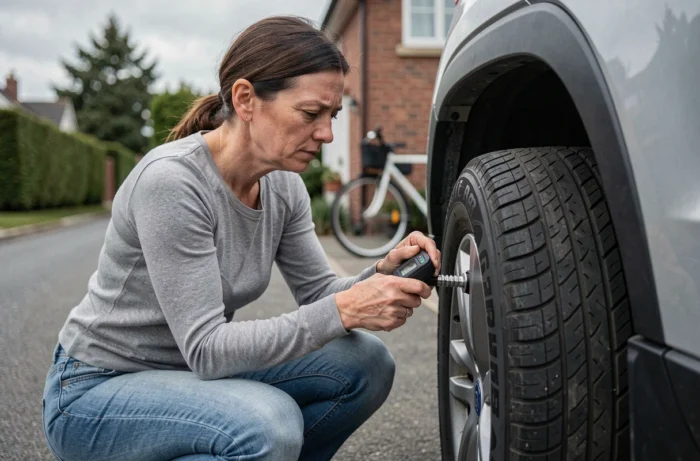
Enhanced Emissions Check: Catalytic Converter, DPF, and OBD Reading
The emissions aspect of the technical inspection has tightened. Centers must now perform an OBD (on-board diagnostics) reading on equipped vehicles, in addition to the standard emissions measurement. Specifically, the diagnostic tool queries the engine control unit to detect anomalies that the opacity meter alone does not reveal.
A clogged particulate filter or a degraded catalytic converter generates fault codes that trigger an unfavorable opinion. However, a preventive cleaning of the DPF (long road regeneration or decarbonization) may be enough to bring the values back into compliance before the inspection.
What the OBD Reading Detects That You Don’t See
The engine light being off guarantees nothing. Some faults remain recorded in the memory of the control unit without illuminating the dashboard. A visit to a mechanic equipped with a diagnostic tool a few weeks before the technical inspection allows for the identification of these dormant codes.
| Checked Point | Classic Method | With OBD Reading |
|---|---|---|
| Smoke Opacity | Opacity Meter (physical measurement) | Opacity Meter + Engine Fault Codes |
| Catalytic Converter | Visual Inspection | Lambda Probe, Catalytic Efficiency |
| Particulate Filter | Visual Inspection | Differential Pressure, Regenerations |
| Engine Light | Ignition Check | Complete Reading of Recorded Codes |
This table summarizes the gap between the old protocol and the new one. The OBD reading detects faults that are not visible during a visual inspection, making pre-diagnosis by a professional even more relevant.
Interior and Body Maintenance: What Truly Preserves Vehicle Value
Mechanical and regulatory maintenance only covers part of the automotive experience. The condition of interior and exterior surfaces directly influences resale value and daily comfort.
Plastics, Fabrics, and Odors: Mistakes That Damage
Using a household cleaner on the dashboard plastics seems logical, but most contain agents that dry out the treated UV-resistant surfaces. A specific car cleaner for interior plastics costs only slightly more and preserves the material’s flexibility over several years.
- Seat fabrics should be cleaned with warm water and a dedicated textile cleaner, never with high-pressure steam that distorts the foam beneath the upholstery.
- Persistent odors often come from the cabin filter: an annual replacement eliminates most issues without resorting to chemical deodorizers.
- Interior windows accumulate a greasy film due to the off-gassing of new plastics. An ammonia-free car window cleaner avoids streaks and protects any tinted films.

Bodywork, Headlights, and Rims: Important Actions
Regular washing of the bodywork is not enough to prevent corrosion. Untreated stone chips rust within months, especially on the sills and wheel arches. A touch-up paint pen applied quickly stops the process.
Oxidized headlights significantly reduce lighting range. A polishing renovation kit restores transparency at a modest cost, whereas a complete replacement costs several hundred euros.
- Aluminum rims should be cleaned with a suitable de-ironing product (controlled acidic pH), never with a universal cleaner that attacks the protective varnish.
- A rinse with clear water after each treatment prevents dried product marks that become permanent in the sun.
- Tires do not require cosmetic shine: a simple wash with soapy water preserves the rubber without accelerating its aging.
Digital Tracking and Maintenance Log: An Underestimated Lever for Resale
Keeping a complete history of interventions (invoices, screenshots of the digital maintenance log) is a strong argument when reselling. Buyers increasingly check maintenance history through online platforms, and a vehicle without documented follow-up loses attractiveness compared to a competitor with a complete record.
Several manufacturers now offer a dematerialized maintenance log accessible with the VIN number. Recording each operation (even those performed outside the network) strengthens the vehicle’s traceability.
Automotive maintenance in 2026 relies on three pillars: classic mechanics, regulatory compliance with the new technical inspection requirements, and care for surfaces. Neglecting any of the three exposes one to avoidable costs or depreciation at resale.