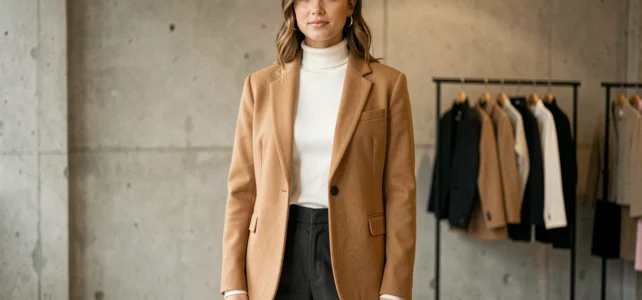
A dress pattern modified at the last minute because the fabric reacts poorly to the intended drape, a seasonal color abandoned because it doesn’t work in-store under artificial lighting: creativity in fashion often plays out against very concrete constraints. Current fashion trends reflect this tension between the desire for personal expression and the reality of materials, tools, and budgets.
Fashion personalization: from marketing gimmick to structural transformation
For a long time, personalization was seen as a nice bonus, a name embroidered on a pouch or a limited color choice. The situation has changed. Platforms like ASOS and Zara now offer services for personalizing patterns, colors, and cuts, and a study by INSEE cited in 2026 indicates that about 70% of consumers feel more connected to their clothing thanks to these options.
This figure reflects a shift. Personalization is no longer a niche argument; it is a strategic axis driven by buyers’ desire for pieces that reflect their personality, profession, and cultural identity. For those who want to explore fashion on Buzzarium, this trend is evident in the analysis of collections where accessible custom-made takes precedence over uniform ready-to-wear.
The report from Spherical Insights & Consulting published in August 2026 confirms that the market for custom and personalized items is growing due to this demand. We are no longer talking solely about artisanal luxury, but about a segment that also influences mainstream brands.
AI-assisted creativity: what it really changes in fashion design
On the ground, artificial intelligence is making its way into workshops and design studios, but not always as one might imagine. Image generators allow for testing dozens of color and pattern combinations before touching a fabric. The time savings are real during the visual exploration phase.
The problem arises at the next stage. An AI-generated visual says nothing about the drape of a textile, its reaction to washing, or its appearance under natural light. Creators who use these tools as a starting point and then validate with physical prototypes achieve concrete results. Those who skip the prototype stage end up with collections that look appealing on screen but are disappointing in-store.
The question of creative governance
A study published on Zenodo emphasizes an issue that fashion content rarely addresses: the need for “human-centered” governance so that AI enhances designers’ creative capacity rather than replacing it. In practice, this means that the creator retains control over the final aesthetic choices, and the tool remains limited to accelerating iterations.
Feedback on this point varies. Some studios report increased productivity without loss of brand identity, while others observe a homogenization of proposals when AI takes too much space in the decision-making process.
Second-hand and artisanal know-how: two underestimated sources of inspiration
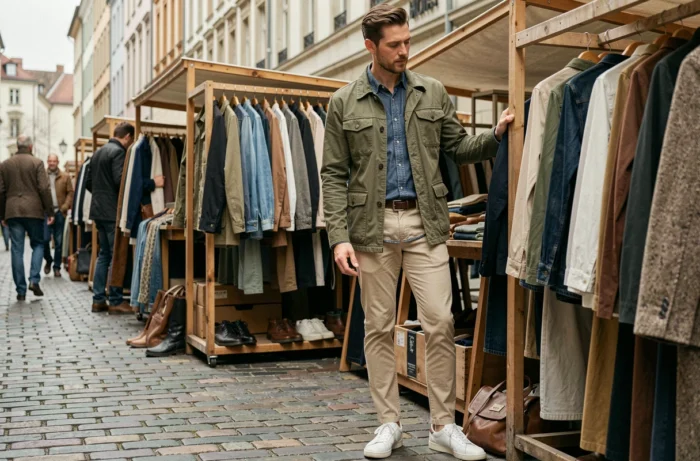
When searching for new ideas for a collection or simply to refresh one’s style, thrift stores and resale platforms offer an exploration ground that runways cannot replace. One can find forgotten cuts, material combinations that no longer exist in current production, and manual finishes that have disappeared from industrial chains.
- Vintage pieces from the 1970s-1990s provide references for proportions (shoulders, waist, length) that designers reinterpret season after season, from seventies style to nineties minimalism.
- The second-hand market allows for handling aged textiles, providing a concrete understanding of fiber behavior over time, useful for anticipating the appearance of new fabric after use.
- Visible artisanal techniques on certain pieces (hand embroidery, natural dyeing, visible topstitching) fuel a return to craftsmanship as a differentiating element against standardized production.
This movement aligns with what several market analyses describe as a return of artisanal know-how in the 2026 trends, where traceability and local manufacturing become arguments of style as much as ethics.
Trendy colors and patterns: how to choose them without blindly following seasonal guides
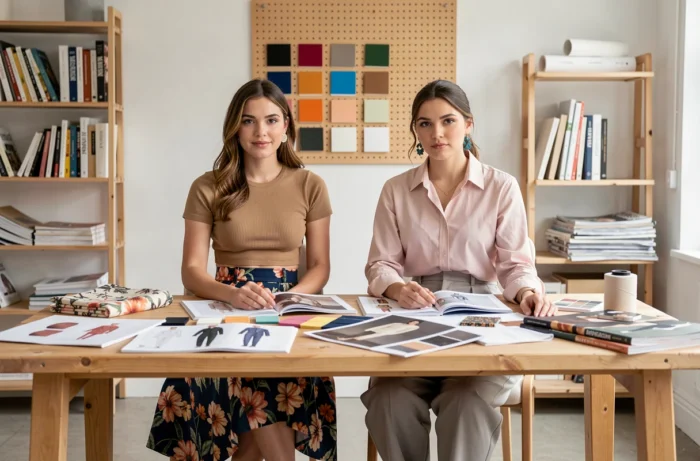
Trend books from trade shows like Texworld offer palettes and guiding patterns each season. These documents are useful as reference points, but applying them as-is results in interchangeable collections.
A more operational approach involves cross-referencing the proposed palette with the actual constraints of one’s project:
- Does the fabric available from the supplier accept dyeing in the exact shade, or does it need to be adjusted to a nearby tone?
- Does the season’s flagship pattern (leopard print, stripes, floral patterns) work on the volumes of the collection, or only on flat pieces?
- Testing a color on the rack in-store before validating production avoids unpleasant surprises related to artificial lighting, which radically alters the perception of shades.
Colors that work in real situations are not always those that shine on a moodboard. Chartreuse green, for example, identified as an emerging color for autumn with a notable increase in online searches, can pose difficulties in-store if complementary pieces have not been thoughtfully designed.
Patterns and visuals: thinking in volume
A print that looks good flat on a screen completely changes once draped on a body. Designers who work on their patterns directly on a mannequin or in muslin before the final print gain in coherence. This step, often shortened due to time constraints, makes the difference between a garment that catches the eye and one that is wearable.
Fashion in 2026 is built at the intersection of these constraints: digital tools that accelerate exploration, a demand for personalization that restructures the offer, and a return to manual gestures that anchor creativity in material. The most sustainable style is the one that is tested, adjusted, and worn, not the one copied from a feed or a trend book.