
Bloodborne offers around twenty melee weapons, each with two forms that can be activated in combat. The choice of a weapon does not rely on a universal tier list: it depends on the chosen build path, the equipped blood gems, and the playstyle practiced. Understanding these mechanics before embarking on a quest for specific equipment saves hours of misdirected investment.
Blood Gems and Scaling: What Makes a Weapon Truly Powerful
A common mistake is to compare weapons based solely on their raw damage value. In Bloodborne, blood gems have more impact than statistics alone on the final power of a weapon. Two players equipped with the same Ludwig’s Blade will achieve radically different results depending on the gems inserted into their slots.
The scaling (how a weapon benefits from your stat points) determines which stat to prioritize. A weapon with an S scaling in Strength will gain little benefit from an investment in Skill. Before looking for where to obtain a specific weapon, first identify whether your build relies on Strength, Skill, Bloodtinge, or Arcane.
To explore each equipment and its location in detail, a comprehensive guide lists the best weapons in Bloodborne along with their characteristics and the areas where they can be unlocked.
Strength or Skill Build in First Run: Which Path to Choose
The advice that frequently comes up in specialized discussions is to start with a single-stat build during your first playthrough. Leveling Strength and Skill simultaneously dilutes progression and delays the moment when your weapon reaches its full potential. A single path also simplifies gem selection, as you are looking for just one type of bonus.
Strength Build: Raw Power and Heavy Weapons
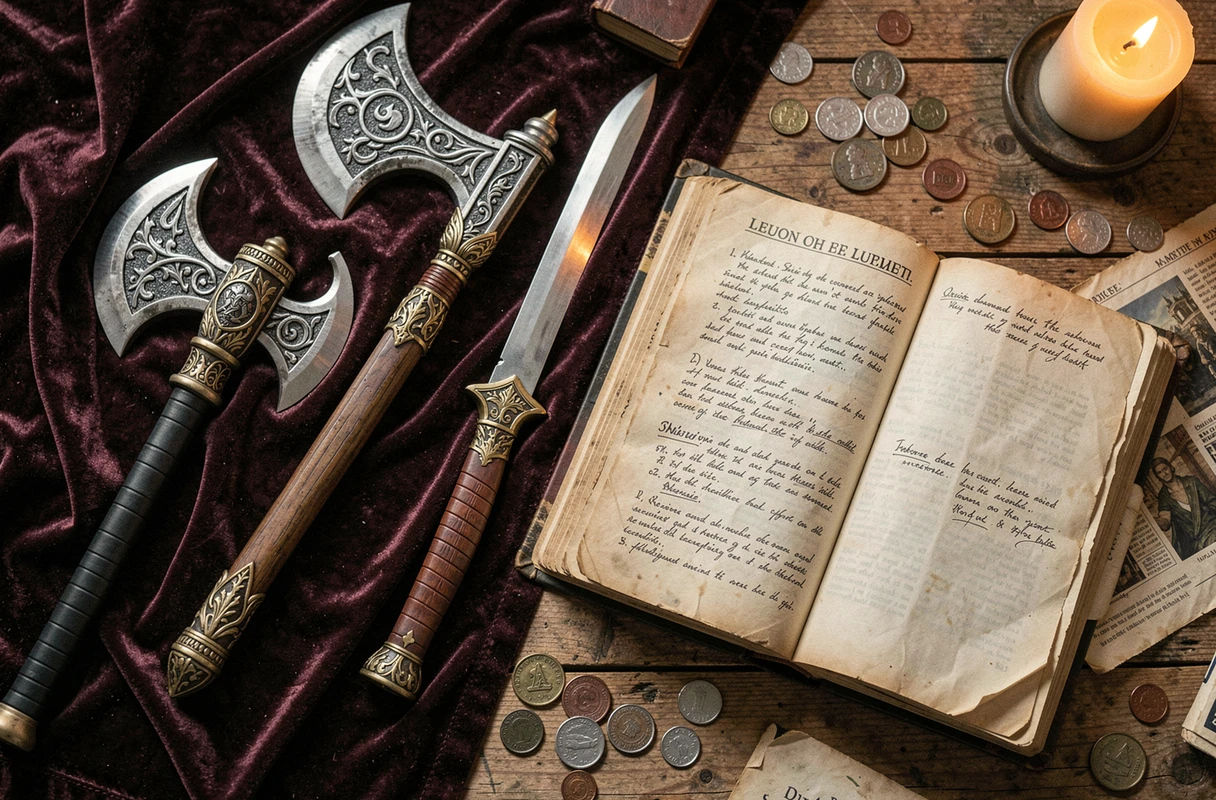
A Strength-oriented build favors weapons like the Kirkhammer or the Logarius Wheel. These weapons hit slowly, but each strike deals high damage. They excel against bosses with large windows for punishment, where a single well-placed hit makes all the difference.
The downside is stamina consumption. Missing a heavy hit leaves a dangerous opening. This build requires precise reading of enemy patterns.
Skill Build: Speed and Viscerals
Skill weapons (Cane, Blade of Mercy, Saw Cleaver) compensate for lower single-hit damage with a high attack rate. The actual DPS often rivals that of heavy weapons thanks to the rapid succession of strikes.
Visceral attacks benefit from Skill scaling, giving an additional advantage to players who master the gun parry. On a Skill build leveled sufficiently high, a visceral can take away a massive portion of a boss’s health bar.
Early Game Weapons: Saw Cleaver, Cleaver, and Cane
The first weapon choice occurs in the Hunter’s Dream, just after the first scripted death. Three options are available:
- Serrated Cleaver: fast in short form, decent reach in long form. Its serrated attribute inflicts a damage bonus against beast-type enemies, which make up a large part of the early game bestiary.
- Saw Cleaver: versatile, with a varied moveset between its two forms. The long form offers a useful horizontal sweep against groups. Its balanced scaling makes it viable across several types of builds.
- Cane: the quintessential Skill weapon from the start. Its whip form covers a wide area and allows for distance management. It requires some adaptation time but rewards patient and precise play.
None of these three weapons become obsolete in the late game. Properly upgraded and equipped with good gems, each can finish the game, including the DLC content The Old Hunters.
Niche Weapons and Hybrid Builds After the First Run
Once the game is mastered with a single path, hybrid builds open up possibilities absent in the first playthrough. Ludwig’s Holy Blade illustrates this logic well: it scales on both Strength and Skill, making it mediocre on a poorly optimized single-stat build but formidable when both stats are leveled in synergy.
Bloodtinge weapons (Chikage, Simon’s Bowblade) form a separate category. They consume health points in transformed mode, requiring constant risk management. The transformed Chikage offers some of the highest damage in the game, but an inattentive player can drain their health in seconds.
Arcane scaling weapons (Logarius Wheel in hybrid build, Moonlight Blade) require a high stat investment before becoming competitive. They are aimed at players who already know the gem farming areas in the chalice dungeons.
Left-Hand Weapons: An Underestimated Role
Firearms are not only for parrying. The Cannon inflicts considerable direct damage on a Strength build, while Evelyn’s Pistol benefits from Bloodtinge scaling. The Rosmarinus, an Arcane left-hand weapon, projects a mist that proves useful in certain PvP matchups.
The choice of left-hand weapon alters the combat tempo as much as the main weapon. A cannon requires careful management of mercury bullets, while a standard pistol allows for frequent parry attempts.
Every weapon in Bloodborne remains viable until the end of the game as long as it is properly upgraded and fitted with suitable gems. The true lever of power lies not in the weapon itself, but in the consistency between stats, gems, and playstyle. Choosing a weapon that you enjoy wielding remains the best selection criterion, far ahead of any theoretical ranking.